
Does That Room Count as a Bedroom? Three Questions to Work Through
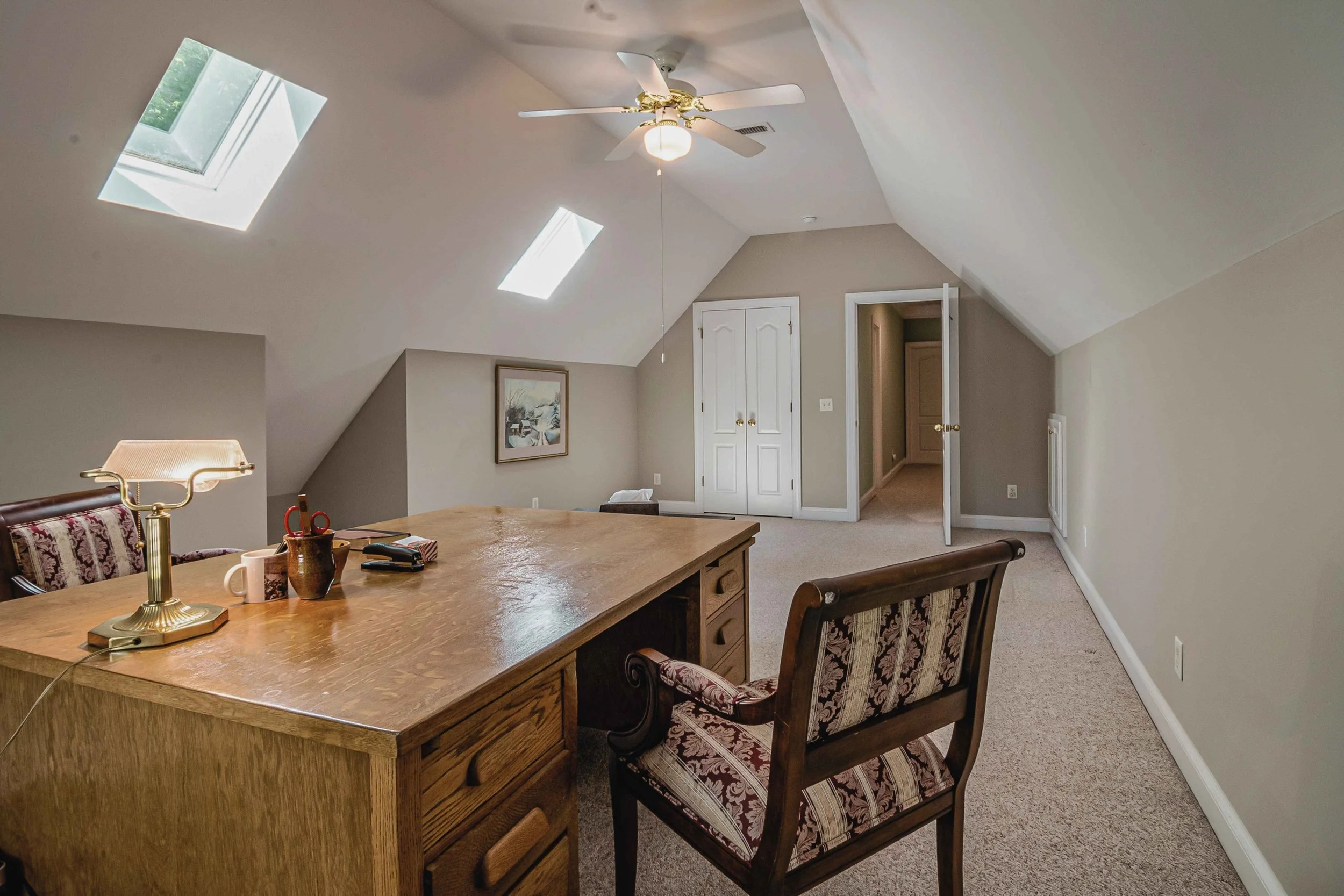
Photo: Curtis Adams
The short answer: Don't start with the label. Before calling a room a bedroom, work through three questions: Does it meet the applicable local safety and code requirements for sleeping space? Does it actually function like a bedroom? And would a typical buyer accept it as one without hesitation? If it falls short, it can still be useful. It may simply be better described as flexible space.
Whether you're getting ready to sell, touring homes as a buyer, or walking a property with clients, the question is the same: does this count as a bedroom? Our founder, David Ziccardi, wrote about it in The Valuation Piece. His advice: stop treating "bedroom" like a label, and start treating it like "a conclusion—something you arrive at after working through a few key considerations."
1. Does it meet local safety and code standards?
This one is non-negotiable. If a space doesn't meet basic standards for a habitable sleeping area, like egress, heat, reasonable size, and proper ceiling height, it doesn't matter what anyone calls it. That's a hard stop.
There's no single checklist that applies everywhere. Many municipalities in our area don't define "bedroom" directly. Instead, they define habitable space, often based on the International Residential Code (IRC) or the International Property Maintenance Code (IPMC). In Pennsylvania, more than 90% of municipalities administer and enforce the statewide Uniform Construction Code locally, and Philadelphia enforces its own adopted codes. Either way, your municipality is the place to confirm what applies.
How to look it up: Start with your municipality's website, or search the town's name plus "ecode" (for example, "Upper Southampton Township ecode"). Many towns publish their codes on platforms like eCode360 or Municode. Then search within the code for terms like "habitable room," "sleeping area," "egress," "minimum room size," and "ceiling height." You're confirming:
Whether there's a legal means of egress
Whether it meets any minimum square footage
What the heating requirements are
Whether there's a ceiling height requirement
Whether any storage or closet requirement applies
You don't need to become a code expert. You're making sure you're not stepping into an obvious problem. If the room clearly fails here, you're done.
2. Does it actually live like a bedroom?
This is where many "technical bedrooms" fall apart. A true bedroom offers a reasonable degree of privacy. It isn't a pass-through: you don't have to walk through it to get somewhere else, and you don't have to walk through something awkward to get into it. It should feel like a space someone could actually live in, not just occupy temporarily.
Buyers pick up on this right away, even if they can't explain why. A room that falls short here can still be useful. It just isn't likely to be accepted as a bedroom by the market.
3. Would a typical buyer accept it as a bedroom?
It's tempting to ask, "Will the appraiser count this?" But as David puts it, "appraisers aren't inventing rules—they're reflecting buyer behavior."
The better question is whether a typical buyer would walk in and accept the room as a bedroom without hesitation. If they wouldn't, that hesitation doesn't disappear. It shows up later in pricing, in negotiations, and sometimes in the appraisal. When a room clearly reads as a bedroom, no explanation is needed, and that lack of friction keeps deals moving.
What about the rooms in between?
Most questionable spaces fall into one of three groups:
Clearly a bedroom. It meets safety expectations, functions the right way, and matches what buyers expect. Count it and move on.
Clearly not a bedroom. It lacks privacy, fails basic standards, or doesn't make sense as a sleeping space. Leave it out of the bedroom count. Described accurately, it can still be a valuable part of the home.
Somewhere in between. An office with a closet and window. A finished attic. A basement room that meets code but feels slightly off.
For that last group, the stronger move is to present the room as flexible space instead of forcing it into the bedroom count. That doesn't diminish its value. It gives buyers room to see the space in a way that works for them, which creates far less resistance than trying to convince someone of something they're already unsure about.
What this means for you
If you're selling: Count only the rooms that clearly work as bedrooms, and describe the in-between spaces as flexible space. If you're unsure how a room's characteristics may affect your property's market value, a pre-listing appraisal can provide an independent, market-supported opinion of value before you set your asking price. Learn about pre-listing appraisals →
If you're buying: Don't assume the bedroom count in a listing tells the whole story. Work through the same three questions, especially if a room gives you pause. How the market views that space can matter when you're deciding what the property is worth to you.
If you're an agent: This is the situation David originally wrote about — walking a property and finding a room that doesn't quite fit the label. His full article goes deeper into how to work through the question before it becomes an issue later. Read David's full article →
Not sure how a space may be viewed in the market? Talk with an appraiser.
Share a few details about your property to start the conversation.
We work across our Pennsylvania and New Jersey service areas. See where we work in Pennsylvania and New Jersey.
